
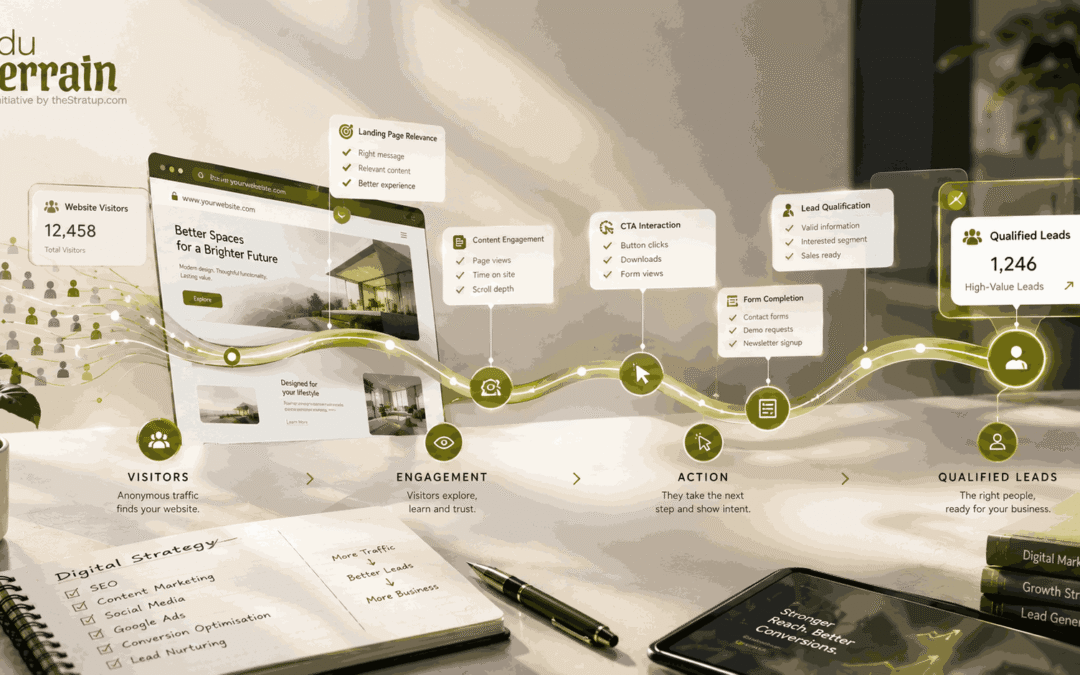
A website can attract thousands of visitors and still struggle to generate meaningful enquiries. The difference often lies in what happens after the visitor arrives. In Digital Marketing Classes in Coimbatore, learners can develop the strategic thinking needed to identify where visitors lose interest, what prevents them from taking action, and how each stage of the website journey can be improved.
Traffic is only the starting point. A successful digital strategy connects the right audience with relevant information, builds confidence and makes the next step clear. Whether the goal is a course enquiry, product purchase, consultation request or demo booking, every element of the digital experience can influence conversion.
Traffic Is Not the Same as Business Opportunity
A growing visitor count may look positive in an analytics report, but traffic alone does not guarantee business growth.
Consider a training website receiving visitors from several search queries. Some may be researching digital marketing as a career, others may be comparing institutes, while some may simply want free information. If all these visitors land on the same generic page, the business may receive traffic without receiving qualified leads.
A smarter approach starts by asking:
- Who is visiting?
- Why did they arrive?
- What information are they looking for?
- How close are they to making a decision?
- What action should they take next?
This changes the focus from getting more visitors to getting the right visitors and helping them progress.
Find the Moment When Visitors Stop Moving
Every website has points where potential customers lose momentum.
A visitor might read the headline but leave immediately. Another might explore several pages but never submit a form. Someone else might reach the enquiry page and abandon the process.
These patterns provide valuable clues.
A marketer can examine:
Landing page → Engagement → Page movement → CTA interaction → Form visit → Submission
If a large number of users reach a service page but very few click the CTA, the problem could be the offer, messaging, CTA placement or lack of trust.
If visitors click the CTA but abandon the form, the form itself may be creating friction.
The objective is not to assume the reason. It is to investigate the evidence.
Match Landing Pages With the Reason People Search
One of the most overlooked conversion factors is the relationship between search intent and landing-page content.
Imagine someone searches for “digital marketing course fees in Coimbatore.” They are likely looking for information that helps them evaluate a course.
Sending that visitor to a generic homepage creates unnecessary work.
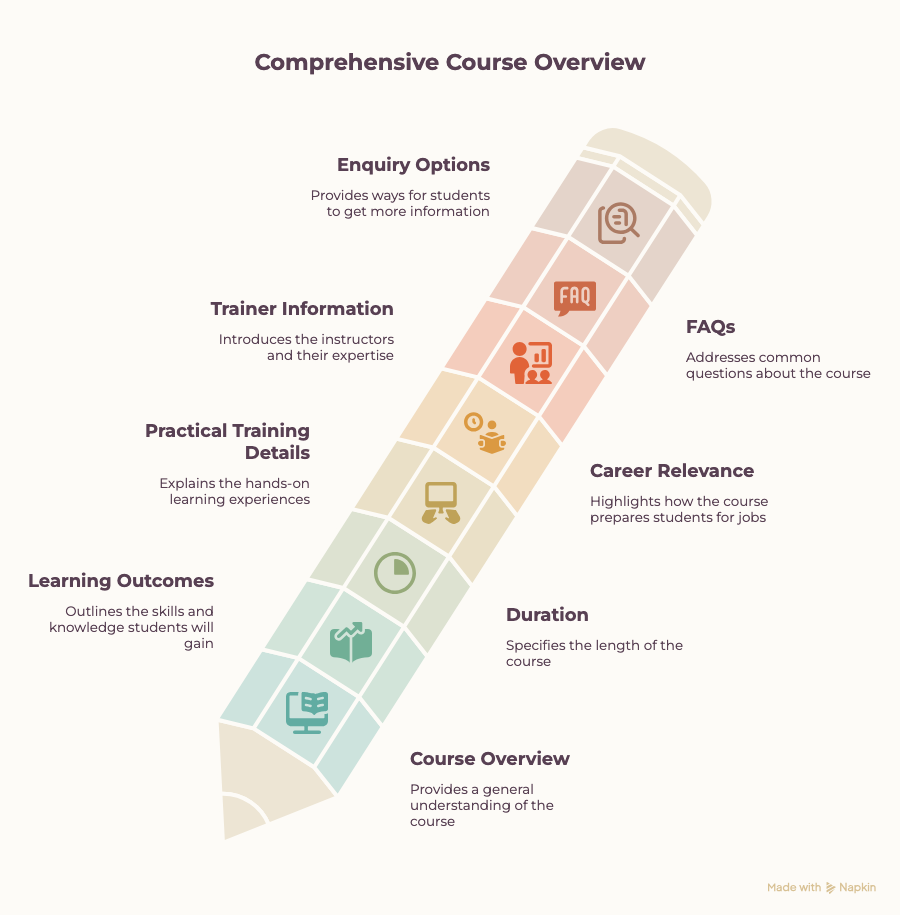
A dedicated page could instead provide:
- Course overview
- Learning outcomes
- Duration
- Practical training details
- Career relevance
- Trainer information
- FAQs
- Enquiry options
The closer the page matches the visitor’s original intent, the easier it becomes for that person to continue their journey.
This principle is particularly useful for learners attending Digital Marketing Classes in Coimbatore, because it connects keyword research with actual conversion strategy rather than treating SEO and conversion optimisation as separate activities.
Give Visitors a Reason to Continue
A visitor should quickly understand three things:
What is being offered?
Why does it matter to me?
What should I do next?
A weak page might say:
“We provide professional digital marketing training.”
A stronger page communicates the practical value more clearly:
“Build hands-on digital marketing skills through live campaigns, SEO projects, analytics and performance-focused training.”
The second message gives visitors more context about the experience and potential outcome.
The goal is not to make every headline dramatic. It is to make the value immediately understandable.
Build Trust Before Asking for the Enquiry
People rarely submit their details simply because a website asks them to.
Before sharing contact information, they may want evidence that the business is credible.
Trust can be developed through:
- Student or customer testimonials
- Project examples
- Trainer credentials
- Client work
- Reviews
- Certifications
- Clear course or service information
- Transparent processes
- Relevant case studies
For an education brand such as EduTerrain, practical project examples can be particularly useful. Instead of simply claiming that learners receive practical exposure, showing what they can actually work on makes the statement more credible.
Trust reduces uncertainty, and reducing uncertainty can make the next action easier.
Use Analytics to Diagnose Instead of Guessing
Analytics becomes much more useful when marketers ask specific questions.
Instead of simply checking whether traffic increased, examine:
| METRIC | QUESTION TO ASK |
|---|---|
| Landing-page visits | Which pages attract potential customers? |
| Engagement | Are visitors finding the content useful? |
| CTA clicks | Are users responding to the next step? |
| Form starts | Are visitors showing genuine interest? |
| Form submissions | Where are conversions happening? |
| Conversion rate | Which pages turn visits into leads? |
| Traffic source | Which channels bring qualified visitors? |
The numbers become valuable when they lead to decisions.
For example, if organic traffic is increasing but conversions remain flat, the next step could be reviewing search intent, landing-page relevance and conversion messaging rather than simply publishing more articles.
Connect SEO With Conversion Strategy
SEO should not end when a page reaches the search results.
Ranking brings an opportunity. The website must then convert that opportunity into meaningful engagement.
A strong SEO-to-lead journey could look like:
Search query → Relevant result → Focused landing page → Useful information → Trust signal → CTA → Lead
Every stage matters.
For example, a page ranking for a course-related search should not merely contain keywords. It should answer the visitor’s questions, demonstrate relevance and provide a clear route toward learning more.
This is where SEO becomes connected to business performance.
Learners in Digital Marketing Classes in Coimbatore can benefit from practising this complete journey because it shows how keyword research, content, UX, analytics and conversion optimisation influence one another.
Test Improvements Before Making Big Changes
Not every conversion problem requires a complete website redesign.
Small experiments can provide useful evidence.
A marketer could test:
- Two different headlines
- A shorter enquiry form
- Different CTA wording
- A stronger testimonial section
- A different content order
- More prominent course information
- A clearer value proposition
The purpose of testing is not simply to find a prettier page. It is to discover which version helps users take the intended action.
A simple cycle works well:
Identify → Hypothesise → Test → Measure → Learn → Improve
Over time, these small improvements can create a much stronger conversion system.
Lead Quality Matters More Than Lead Quantity
Imagine two campaigns.
Campaign A produces 100 enquiries, but only three are genuinely interested.
Campaign B generates 35 enquiries, with 15 becoming serious prospects.
Which campaign performed better?
Looking only at lead volume would favour Campaign A. Looking at business value may produce a completely different conclusion.
Digital marketers should therefore consider:
- Qualified leads
- Lead-to-customer rate
- Cost per qualified lead
- Conversion by traffic source
- Customer acquisition cost
- Revenue generated
This prevents teams from celebrating numbers that do not contribute meaningfully to business growth.
Turn Conversion Data Into the Next Marketing Decision
The most valuable part of conversion optimization is what happens after the measurement.
Suppose analytics shows that visitors coming from organic search convert better than visitors from a particular social campaign.
That insight could influence future content, SEO priorities and budget allocation.
Or suppose a particular landing page generates strong enquiries.
The marketer could investigate why it works and apply those principles elsewhere.
This creates a continuous improvement loop:
Data → Insight → Action → Result → New Insight
That is how a website gradually becomes more effective instead of remaining a static digital brochure.
Practical Skills Behind Smarter Lead Generation
The ability to turn visitors into leads requires several connected skills.
A modern digital marketer needs to understand:
- Search intent
- Audience research
- SEO
- Content strategy
- Landing-page optimisation
- Conversion principles
- Analytics
- Campaign performance
- User behaviour
- Testing and optimisation
These skills become more valuable when they are applied together.
At EduTerrain, practical digital marketing learning can help students connect individual techniques with the larger customer journey. Instead of viewing SEO, content, paid advertising and analytics as separate subjects, learners can see how they contribute to one measurable business objective.
The Real Goal Is Better Customer Movement
A successful website does not simply attract attention. It guides the right people toward the right next step.
Traffic brings people to the door. Relevant content gives them a reason to stay. Trust gives them confidence. A clear CTA gives them direction. A smooth conversion process makes taking action easier.
For anyone pursuing Digital Marketing Classes in Coimbatore, learning to connect these stages can create a much stronger foundation than learning individual marketing tools in isolation.