
Imagine two people applying for the same digital marketing job.
Both have similar educational backgrounds. However, one person can show completed projects, practical skills, certifications, and examples of their work.
Which candidate is likely to create a stronger impression?
In many cases, the person who can demonstrate their skills has an advantage.
Today, businesses use websites, search engines, social media, advertising platforms, analytics, and AI tools to reach customers. Because of this, companies need marketers who understand digital marketing and know how to apply their knowledge.
A digital marketing course can help beginners build this foundation. However, learning should go beyond simply understanding marketing terms. Learners should also practice their skills, work on projects, analyze results, and understand how marketing decisions are made.
At EduTerrain, structured learning can help students develop practical knowledge and build confidence for future career opportunities.
Why Professional Credibility Matters in Digital Marketing
Digital marketing is a competitive field.
Many people know the basic meaning of SEO, social media marketing, content marketing, and paid advertising. However, knowing these terms is different from using them in a real situation.
Professional credibility develops when you can show that you understand your work.
For example, you may improve your credibility by showing:
- An SEO audit you completed
- Keyword research you performed
- A content strategy you created
- A social media campaign you planned
- Marketing results you analyzed
- Projects included in your portfolio
These examples give employers or clients a better understanding of your abilities.
A good digital marketing course can help learners move from theoretical knowledge to practical skills.
Developing Skills That Are Useful in Real Marketing Work
Digital marketing includes many connected areas.
A beginner should understand the basics of:
- Search engine optimization
- Keyword research
- Content marketing
- Social media marketing
- Paid advertising
- Email marketing
- Website analytics
- Customer behaviour
However, learning every topic separately is not enough.
Real marketing work often connects several skills.
For example, an SEO campaign may involve keyword research, content creation, website optimization, and performance tracking.
A useful digital marketing course should help learners understand both individual skills and how those skills work together.
How Practical Learning Builds Confidence
Reading about marketing can help you understand the basics.
Practice helps you understand how marketing actually works.
For example, you may know what keyword research is. But when you research keywords for a real business, you need to make decisions.
You need to ask questions such as:
- What is the target audience searching for?
- Which keywords are relevant?
- What is the search intent?
- Can the website realistically compete?
- What type of content would help users?
This is where practical learning becomes valuable.
Projects allow learners to make mistakes, test ideas, and improve their work.
Over time, repeated practice can improve confidence.
Why Certifications Can Support Professional Growth
A certification can show that a learner has completed structured training.
It can be useful when adding information to a resume or professional profile.
However, a certification alone does not prove that someone can successfully manage every marketing task.
The strongest combination is:
Learning + Certification + Practical Skills + Projects
For example, a learner can complete a course and then demonstrate their skills through keyword research, content planning, campaign analysis, or website audits.
This combination can create stronger evidence of professional development.
A digital marketing course can therefore be a starting point, but continuous practice is important for long-term growth.
Using Digital Marketing Skills to Build a Personal Brand
Digital marketing skills can also help professionals promote themselves.
A personal brand does not mean constantly promoting yourself online.
It means creating a professional presence that clearly shows:
- What you know
- What skills you have
- What work you have completed
- What topics you understand
- What value you can provide
For example, a beginner could share useful marketing insights, project learnings, or case studies on professional platforms.
Over time, this can help create visibility.
A digital marketer who understands SEO, content, and audience behaviour can also use these skills to improve their own professional presence.
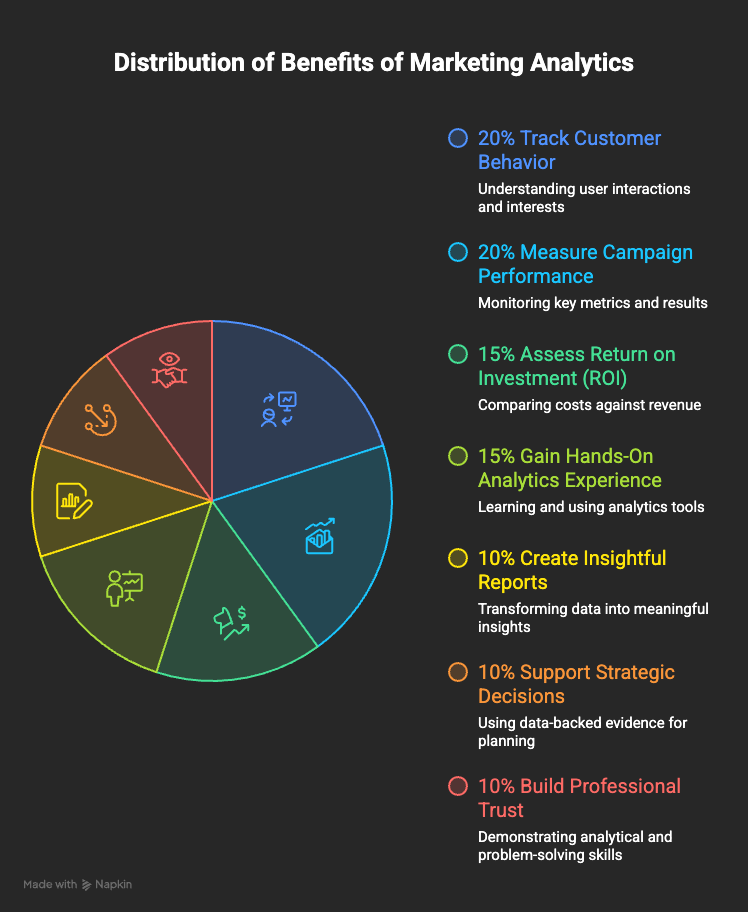
Turning Marketing Data Into Better Decisions
Digital marketing involves more than creating content or running campaigns.
Marketers also need to understand what happens after a campaign begins.
For example, analytics can help answer questions such as:
- Where are website visitors coming from?
- Which pages receive the most traffic?
- Which campaigns generate engagement?
- Where do users leave the website?
- Which marketing activities need improvement?
Learning to read data can help marketers make better decisions.
However, data should not be viewed without context.
A large amount of traffic does not always mean a campaign is successful. A marketer should understand the campaign goal and measure results accordingly.
This ability to interpret data can become an important professional skill.
Staying Relevant in an AI-Powered Marketing Environment
AI is becoming part of many digital marketing workflows.
It can support activities such as:
- Research
- Content ideation
- Data analysis
- Automation
- Campaign optimization
- Draft creation
However, AI does not remove the need for marketing knowledge.
AI-generated information should be reviewed for accuracy and relevance.
A marketer still needs to understand the audience, business goals, brand voice, and campaign strategy.
The most useful skill is not simply knowing how to use an AI tool.
It is knowing how to use AI responsibly, review the output, and improve the final result.
A modern digital marketing course should help learners understand both traditional marketing skills and changing technologies.
Building Real Experience Through Projects
Employers often want to see what a candidate can actually do.
This is why projects can be valuable.
A beginner might complete a project such as:
- Choose a business or website.
- Understand its target audience.
- Research relevant keywords.
- Review the website.
- Identify possible improvements.
- Create a content or marketing plan.
- Track available results.
- Explain what could be improved.
This process can teach more than memorizing marketing definitions.
It helps learners understand how marketing decisions are connected.
A strong project can also become part of a professional portfolio.
How a Portfolio Builds Trust
A portfolio gives learners an opportunity to show their work.
A digital marketing portfolio could include:
- Keyword research documents
- SEO audits
- Content strategies
- Social media plans
- Advertising campaign examples
- Website performance analysis
- Case studies
The most useful portfolio projects explain the full process.
Instead of only showing the final result, explain:
The problem → The research → The strategy → The action → The result or learning
This helps employers understand how you think and solve problems.
Why Networking and Communication Matter
Digital marketing is rarely a one-person activity.
Marketers may work with:
- Designers
- Developers
- Content writers
- Sales teams
- Business owners
Because of this, communication is an important skill.
A marketer should be able to explain ideas clearly and understand feedback.
Networking can also create learning opportunities.
Talking with other professionals can help beginners understand different industries, tools, and marketing approaches.
Training programs that encourage discussion, collaboration, and project work can help learners develop these professional skills.
Turning Knowledge Into Long-Term Career Growth
Professional credibility is not built overnight.
It develops gradually.
A beginner can start by learning the basics. Then they can practice those skills through projects. Over time, they can build a portfolio and gain experience.
The journey may look like this:
Learn → Practice → Make mistakes → Improve → Build projects → Show your work → Gain experience
This approach can help learners develop genuine confidence.
The goal is not simply to complete a digital marketing course.
The goal is to become capable of understanding marketing problems and applying suitable solutions.
Frequently Asked Questions
1. How does a digital marketing course improve professional credibility?
A course can help learners develop relevant knowledge and skills. Practical projects, certifications, and portfolio work can provide additional evidence of professional development.
2. Can beginners build a career after learning digital marketing?
Yes. Beginners can start by learning the fundamentals, practicing their skills, and building projects. Career growth usually develops through continuous learning and practical experience.
3. Is certification enough to become a digital marketer?
A certification can be useful, but practical skills are also important. Projects, portfolio work, and real experience can help demonstrate your abilities.
4. What should I include in a digital marketing portfolio?
You can include SEO audits, keyword research, content strategies, social media plans, campaign examples, analytics reports, and case studies.
5. Why is practical experience important in digital marketing?
Practical experience helps learners understand how marketing concepts work in real situations. It also improves decision-making and problem-solving skills.
Conclusion
A successful digital marketing career requires more than knowing marketing definitions.
Professionals need practical skills, the ability to solve problems, an understanding of data, and the willingness to keep learning.
A digital marketing course can provide a useful foundation for beginners. However, the greatest value comes when learners actively apply what they learn.
When choosing a course, look beyond the syllabus.
Consider whether you will have opportunities to:
- Practice real skills
- Work on projects
- Understand marketing tools
- Receive feedback
- Build a portfolio
With structured learning and consistent practice, beginners can gradually build the skills and professional credibility needed for future opportunities.
EduTerrain can help learners begin this journey by providing structured learning focused on developing relevant digital skills.